Lavendar Lewis
Anne of AvonleaLavendar Lewis is the independent, imaginative woman who lives alone at Echo Lodge, a small stone house in Avonlea. Long before Anne Shirley meets her, local accounts have reduced her to a figure of romantic eccentricity: people say she has been queer ever since Stephen Irving left, and that she lives by herself in her unusual home. The encounter at Echo Lodge complicates that reputation. Lavendar is playful and unconventional, but she can also explain the history behind her solitude with candor, humor, and a clear-eyed sense of what her life has become.
Identity and Setting
Echo Lodge distinguishes Lavendar’s home from the familiar wooden farmhouses around it. It is built of rough red Island sandstone, with a low roof, dormer windows, and chimneys; ivy covers its stone walls. The house’s distinctive appearance suits the independence that Lavendar describes in her own terms: rather than imitate a conventional pattern of unmarried womanhood, she has chosen her own way of living it.
When Anne and Diana Barry first arrive, they expect an elderly spinster of the familiar sort. Instead, they meet a small, carefully dressed woman with thick white hair, a youthful-looking face, dimples, and soft brown eyes. Her cream gown is decorated with pale roses. The contrast between the visitors’ expectation and the person before them establishes an important feature of Lavendar’s characterization: the stories told about her cannot quite contain her. She is neither the stock figure the girls anticipate nor simply the tragic recluse described by neighborhood gossip.
The interior of Echo Lodge likewise bears the mark of care. Its low-ceilinged room has small, square windows and old-fashioned furnishings, kept neatly and delicately. On the day Anne and Diana visit, a table is laid with pale-blue china and food, with six places set. The arrangement first suggests that company is expected. In fact, it is part of a tea party Lavendar has prepared for company she has only imagined.
Make-Believe and Companionship
Lavendar admits that she is not expecting guests: she has been lonely, loves the right kind of company, and so has pretended to hold a tea party. She cooked for it, decorated the table, set out her mother’s wedding china, and dressed for the occasion. Her maid, Charlotta the Fourth, shares the loneliness of the house, though she does not reveal the private make-believe. Lavendar is embarrassed at being discovered, but not ashamed enough to stop explaining herself. She regards imagination as a personal freedom, especially when it harms no one, and says that sometimes pretending helps her live with the loneliness.
The visitors respond differently. Diana thinks the performance confirms that Lavendar is peculiar, while Anne recognizes in it a familiar delight in imagining things. Her question about whether Lavendar imagines things too establishes an immediate affinity between them. Lavendar welcomes the actual guests and turns the prepared meal into the tea party she had only been pretending to have. The scene makes imagination more than solitary escape: it creates a point of recognition between Lavendar and Anne, and gives an unreal gathering a real human answer.
Lavendar also treats her unmarried life as something she can shape rather than merely endure. She jokes that since she had to remain an old maid, she resolved to be a very nice one, and explains that people call her odd because she follows her own pattern instead of copying a traditional one. The humor does not erase her loneliness or loss. It shows how she makes room for pleasure, domestic rituals, and fantasy within a life that did not take the course she expected.
The Broken Engagement
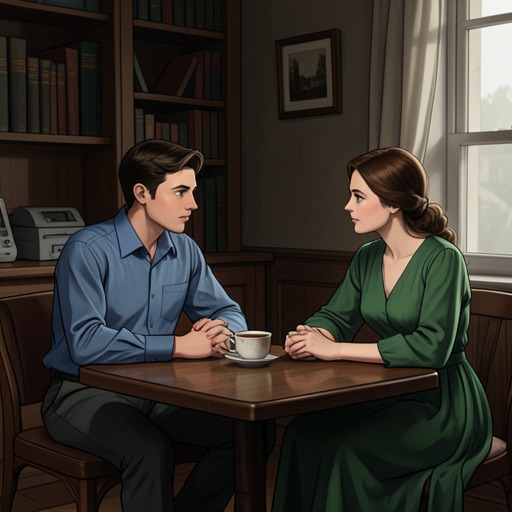
Lavendar tells Anne that she and Stephen Irving were engaged twenty-five years earlier and planned to marry the following spring. Their attachment reached back to childhood. When Stephen was nine and Lavendar six, he told her that he had decided he would marry her when he grew up. She remembers answering politely, then telling her mother that his declaration had relieved her fear of becoming an old maid. In adulthood, she had a wedding dress made, though only her mother and Stephen knew about it.
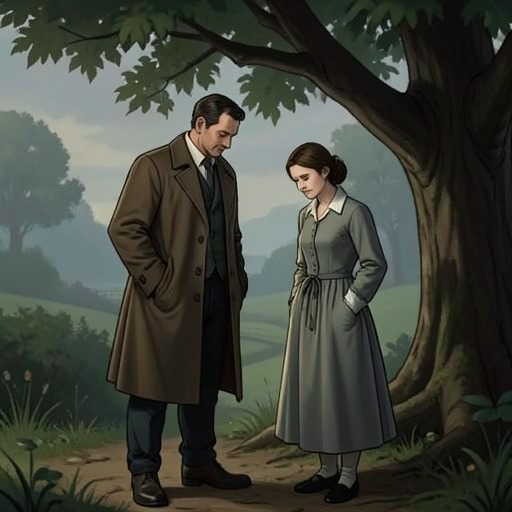
The engagement ended not through a decisive betrayal but through a quarrel so ordinary that Lavendar can no longer remember how it began. She says Stephen started it, while also acknowledging that she may have provoked him. She had been vain and coquettish and liked teasing him; he was sensitive and high-strung. They parted angrily, and Lavendar assumed the disagreement would be repaired. When Stephen returned before she had stopped sulking, she would not listen or forgive him. He left, too proud to come back; she remained too proud to send for him. In her account, pride and sulking compounded a commonplace dispute into a permanent separation.
Lavendar says she could never care for anyone else and would rather remain unmarried than marry someone who was not Stephen. She describes the realization that he would not return as a genuine heartbreak, but resists turning her whole identity into a picture of unbroken tragedy. A broken heart, she tells Anne, is more like a bad tooth than the grand sorrow of a book: it hurts at intervals, but between those spells a person can still enjoy life, dreams, and peanut candy. Her humor corrects Anne’s disappointed expectation that the apparently cheerful woman must be hiding a continuously tragic memory. For Lavendar, ordinary comforts do not cancel grief; they coexist with it.
Paul Irving and the Limits of the Past
When Anne offers to bring Paul Irving to meet her, Lavendar is interested but asks for time. She worries that seeing Stephen’s son might bring more pain than pleasure, whether Paul looks too much like his father or not enough like him. A month later, Anne and Paul walk through the woods to Echo Lodge and meet Lavendar in the lane. She turns pale, takes Paul’s hand, and recognizes his resemblance to Stephen. Paul, at ease, says that people often call him a chip off the old block.
The meeting places the old engagement beside its consequences in the present without resolving Lavendar’s past through the child. Her hesitation conveys how strongly Stephen’s memory still matters; her decision to receive Paul shows that she is willing to approach that memory through an actual relationship, despite the uncertainty she had anticipated. The narrative gives no basis here for claiming that the encounter removes her old pain. Instead, it presents her as able to acknowledge the risk, meet Stephen’s son, and continue to make room for connection.
Narrative Role
Lavendar’s story brings together solitude, imagination, and the difference between romantic expectation and lived experience. Her invented tea party is not simply a comic eccentricity: it begins in loneliness, but becomes a real occasion when Anne and Diana arrive. Her history with Stephen similarly resists a simple tragic legend. The lost engagement matters deeply, yet Lavendar describes its cause as an unremarkable quarrel intensified by mutual pride, and describes its aftermath as pain interrupted by the continuing capacity to enjoy life.
Anne’s response is central to how Lavendar becomes more than a local report of strangeness. Where Diana sees a peculiar performance, Anne recognizes a fellow imaginer. That recognition gives Lavendar a companion with whom she can speak openly about the engagement and eventually meet Paul. Her independence is not presented as proof that she needs no one: she openly longs for company. It is the means by which she has fashioned a life of her own while carrying an unresolved attachment, and the story allows both her longing and her capacity for pleasure to remain true.